Showing posts with label bullying. Show all posts

Thursday, October 12, 2017

Bullying Prevention Month

OCTOBER IS BULLYING PREVENTION MONTH!


Newsletter sent to teachers

Here’s the school wide challenge I set up for my teachers:

https://www.teacherspayteachers.com/Product/Friendship-Activities-I-Can-Be-A-Sweet-Friend-2481378
K-1: Being kind is so sweet! Help students differentiate between a "sweet" friend and a "sour" friend with the activity from Counselor Chelsey. Next have students write one they can be be a sweet friend on a watermelon seed. Turn the seeds into your counselor for a “sweet” wall display and win a friendship book for your class library. Also, check out a book from the counselor on being a sweet friend to add to your lesson, morning meeting, or for students to read independently.


2nd-3rd: We stand up to bullies! Borrow any book on bullying to read to your class. After reading the book have students sign the anti- bully pledge (I got these from the Dollar Tree.) If you turn in your pledge cards to the counselor you will win a book for your class library.


4th-5th: Choose Kind: Become A Certified Kind Classroom.  Read Wonder or borrow the picture book We’re All Wonders to read as a class. Visit www.penguin.co.uk/choosekind to become a certified kind classroom. Share your success with the counselor and win a Wonder series book or related title for your class library.


Thursday, July 7, 2016

New book buys

Here are a few books I picked up this week, that I am excited about for next year:


With the help of his imaginary friend, Weasel, Ellison finds his very own voice - a jazzy sound that charms all the other animals!" (https://www.goodreads.com/book/show/563061.Ellison_the_Elephant?from_search=true).


How I want to use:  This comes with a CD so it would be a great read aloud for students (I can save my voice) to talk about friendship and finding your talent. I also think this would be a great book to lend teachers to continue the lesson in the classroom. They can use it as a Daily 5 station and the students can listen to the cd.


"This endearing friendship story about a boy and his dog from a Pulitzer Prize–winning writer gently explores a timeless question: who’s really in charge?
Meet Sid. He’s an ordinary kid. He’s far from perfect. But to Murphy, Sid’s faithful dog, Sid is the whole world. Murphy thinks Sid is the absolute best—and that he’s in charge of everything.
Sid loves Murphy right back, but he can’t help but wonder what Murphy would think if he realized the truth: Sid’s just a kid, and Murphy’s just a dog, and neither one can control the world." (https://www.goodreads.com/book/show/18122696-me-dog)

Topics to cover with this book: self control, friendship, respecting adults/teachers, rules, perfectionism, self acceptance and self esteem, etc.


"A boy rides a bicycle down a dusty road. But in his mind, he envisions himself traveling at a speed beyond imagining, on a beam of light. This brilliant mind will one day offer up some of the most revolutionary ideas ever conceived. From a boy endlessly fascinated by the wonders around him, Albert Einstein ultimately grows into a man of genius recognized the world over for profoundly illuminating our understanding of the universe. "  (https://www.goodreads.com/book/show/14955390-on-a-beam-of-light?from_search=true)

Wednesday, January 6, 2016

3 Books, 3 Perspectives


A counselor friend of mine recommended the Weird! book series to me, and I am so glad she did. I could go on and on and on about this series, but the testimony really comes from my students. Each month I do a book giveaway for great behavior and after reading the second book in the series, one of my boys asked me if I could “please buy the books for the giveaway.” Even though he has a 1 in 900 chance of winning, he was that into them! He’s not the only one, even my most hesitant and challenging students are totally into these books. Why? I have my theories. First, the illustrations by Paula Heaphy are youthful yet mature. Second, the topic is totally relevant to every student. Third, they are so well written. Author Erin Frankel, who is also an educator, makes these books so relatable perhaps in part from her own experience of being bullied. Yet, for me the books are easy to read, catchy, and intriguing. Lastly, the series makes you want more. Like a great movie you can’t want for the sequel and feel sadness when the trilogy ends.

So let’s talk about the other “W’s”.

What: The Weird! Series is a three part series that focuses on bullying. The first book, Weird! is told from the point of view of the target. (*note: I think it’s very important to use the term target and not victim. Anyone can be a target, but not everyone has to be a victim.) The second book Dare! is old from the perspective of the bystander or the person witnessing the bullying. To wrap it up you get to hear from the bully in Tough!.

Where: The books take place in the school setting. At some point our students will be a target of bullying, a bystander to bullying, or the bully themselves.  As a School Counselor, I use these books in my classroom guidance lessons. Teachers can use them in their classroom when talking about respect, during a class meeting, or as a book/author study.

When: Don’t try to read these books in one sitting. I see my students once a month, so it’s taken us three months to get through the series. This really keeps them on the edge of their seats. You should really plan to spread the books into a 3 day, 3 week, or 3 month series. Don’t overwhelm- let it sink it, settle, and stew. I really believe that if you the students marinate with the books, it allows them to take it to a deeper level.

How: So how can you use these books? There are so much you can do with these books, but here’s what I did.
            Introduction: First, I showed the students the cover of all 3 books and asked them to make observations about each. I then read the back cover and we discussed how each book was told from a different perspective. This lead to a short discussion on point of view which included them making educated guesses on which book was told from what point of view.
            Reading the story: Heads up- have a chunk of time to read these books. My classes are 45 minutes and they used every second of that time. Some students even panicked shouting out that we only had 5 minutes and would we get to the end? Even though these picture books are short the student’s love making observations and connections to the story. I really started with three simple prompts:
1) “What do you notice about this page?” or “What did you notice about the illustrations?”
            2) “What connection can you make to the story?”
            3) “Tell me what you think will happen next” or “Make a prediction about what’s going to happen.”

The discussion was really student lead from there. Everyone, and I mean everyone, had something they wanted to point out, a story (with names changed to protect the innocent) to tell, or a guess about what would happen to the character. I didn’t write down all of  discussions and where they went, but I can tell you that each class really let it morph to where they wanted or needed to go.

Additionally, if you have taught your student's the Olweus definition of bullying (that it's repetitive, intentional/aggressive, there is a power imbalance,etc.) you can ask students to prove, justify, and explain how the example in this book meets the definition. 

Need more? You can also access the leaders guide here: http://www.freespirit.com/files/OTHER/Weird_Leaders_Guide.pdf


Follow up: With our few remaining moments I had them complete one portion of our bully triangle.  It's from the "Stand Up Against Bullies: Grades 3-5" work book by Marco Products. Since each book is written from a different point of view- I am having them fill in the triangle based on the point of view from the main character. When they were done writing we either did partner talks or whole class sharing (depending on time) to discuss their answers.


One more “w!”


What’s next: the dynamic duo of Erin Frankel and Paula Heaphy have also written Nobody!: A Story About Overcoming Bullying In Schools. It’s on my Amazon wish list, because I have no doubt it will make the perfect follow up.


Thursday, November 12, 2015

Lessons for November- friends, safety, empathy, decision making, thankfulness, and bullying!

It's almost time for Thanksgiving break!!!!! Until then, here is a little about the fun we are having in class..

K-
We are talking about being a good friend.

Intro: We started out by reading "Let's Be Friends" on BookFlix.


Next, we watched "Rainbow Fish" on Storyline Online to talk about how good friends put others first and share. 


The class shared examples of good friendship skills that I wrote on starfish and fish.  To end each student decorated his/her own rainbow fish that we put on our bulletin board: "We are all friends in our school" (get it school haha!) 


Need more: Check out the word match on Book Flix:


1st Grade: Our character education word of the month is citizenship. We are reading "Michael, Recycle!" This is such a cute rhyming book and it has a lot of big vocabulary words for 1st grade, like crusader! 
In the past I have used this amazing Rhyme, Define, Rhyme pack by Speech Snacks I found on TPT.
I really like it, but I think its too hard for 1st grade. I would definitely use it for 2nd or 3rd. If your students are up for the challenge there are rhyming cards in the TPT pack- you could hand them out to each child and them find the partner whose card rhymes with theirs. There are also some great discussion cards you could play Quiz Quiz Trade with. 

First, we read and slowly discuss the book. I let the students turn and talk and share their ideas and answer questions. Then at the end the students draw what they would do at school if we had a "Be Greener Campaign." 

Wednesday, April 1, 2015

Perseverance as summer approaches!

This time of year is all about testing, field days, and more testing. I know this time of year I start to lapse on my training with Brooklyn and the dogs get away with a lot.

This time of year I love to do lessons on perseverance (although I still need spell check to help me with that word after many years of teaching.). My favorite book this time of year is "The Three Ninja Pigs" by Corey Rosen Schwartz. I love it so much I've blogged about it many times . I love it so much that I created a packet designed to help teachers and counselors tie it into testing, perseverance/resiliency , team work, problem solving, cultural appreciation, and of course CCSS.  Also, you can connect this book to bullying (link at the end of the blog post).

So here is my latest packet for a book you all NEED to have on your book shelves:


https://www.teacherspayteachers.com/Product/Three-Ninja-Pigs-Activity-Guide-a-lesson-on-perseverance-test-prep-and-more-1792121

Tuesday, February 17, 2015

Funny Friends

Are you guys loving this Android commercial as much as me?


I adore it!  I knew I had to sneak it into one of my lessons. I also had to share with one of my favorite collaborators, S. Svarda, School Librarian extraordinare. Check out her blog here!!!

 This month my lesson with 2nd/3rd really continues to morph, especially with Valentines Day. Here's a rough sketch of what I did and how I used this wonderful video.

Introduction: This month we are talking about respect, being a considerate classmate, and bullying prevention. I introduced the topic asking students to share with a neighbor one way they include others at school.

Lesson: Next I asked them to look and see if they could see any of their answers in our story and we read the  award winning and wonderful book "Each Kindess" by Jacqueline Woodson.

Next (depending on time) we played Quiz Quiz Trade using my "Each Kindness" cards. You can get them on my TPT store for $1. Some classes we played a short game (find 5 partners) and some classes we played a longer game. It really depended on time and what I had planned next.

Follow Up Fun - Here are 2 options for what to do next.

Monday, July 7, 2014

ASCA #14 Reflections

Wow! What an amazing conference. How many newbie ASCA conference attenders can say at their first conference they heard the First Lady speak!!

I am writing this post for 3 reasons:
1) To share with you my highlights and lessons/knowledge learned at the best conference ever.
2) To help ADHD brain remember all the things I want to share with the other counselors in our district.
3) To help me go back and access the information. A online "storage space" for reference if you will.

So let's get started:

Wednesday, March 26, 2014

Is "bullying" the most overused word in schools today?

My pup Brooklyn has a new 'boyfriend' named Gatsby. She watches at the window and if she sees him going for a walk she cries and whines and paces. She loves him. Over Spring Break we were walking and she saw him from afar so she started her happy wiggle dance. Suddenly, Gatsby walked up to another dog and Brooklyn pulled so hard she literally ripped the leash out of my hand leaving one finger so burned and bloody it still hasn't healed. She ran up to the other dog barking and yipping. Was she bullying him? No, but oh my jealousy became her. I have never seen such jealous actions.

Why this story? Well I swear if I have one more parent complaint about "bullying" I might scream. The term bullying has somehow become synonomous with conflict, fighting, and simply not getting along. Friends fight, peers don't always like each other, and yes sometimes bullying does occur. However, when I look at the definition of bullying (is this repeated aggression? is there an imbalance of power? are the feelings from the "victim" different from those of the "aggressor"?) rarely does the reported situation meet the definition. Now, I am not saying bullying isn't a real issue- it is! However, just because two students aren't getting along it doesn't mean that one student is being bullied.

There are so many red flags that go off in my head when a report is made: the student wants to be friends with the so called "bully," they aren't sure it was actually directed at them (especially true in nonverbal situations), the "victim" wants to/is willing to do a mediation with the "bully" (a big no no in real bullying situations),  they have been friends all year and the 'bullying' report comes after they had a big falling out, the so called "bullying" is just now getting reported but we have no examples, cases, documentation, etc. that it's every happened before.

This week I started paying more attention to this phenomena. I realized that students were reporting to me that someone in their class was being a real "bully," but as we discussed it it wasn't so much bullying as a conflict among peers. I think the word has become so overused by adults and students that  my students simply say it without a second thought. As I noticed this I would simply rephrase "what I hear you saying is that you guys aren't getting along" or "sounds like their is some tension between friends right now" and every time they said "yes, that's exactly it."

The term "bully" comes with a lot of baggage. It's a powerful word full of negative connotations and legal ramifications so I think it's vital that we teach students, parents, teachers, and stakeholders what bullying is and what it is not. I think we need to model better phrasing such as "peer conflict, fighting, teasing, etc." so that students are labeled "bullies." It's a word I think we need to use more sparingly. We plaster walls with "anti-bullying" messages. They see the word everywhere, no wonder it's so ingrained in their vocabulary. Instead, I think we should plaster walls with "good friendship skills/good character" so that students can report having trouble with peers and know the important difference. Bullying is important and yes we need to do lessons on reporting it, bystander empowerment, and ending it, but we also need to know and model the difference, we need to distinguish between "lessons on bullying" and "lessons on improving peer relations" so that the term "bullying" doesn't creep into our everyday vocabulary.

So I am off my soap box to share a little newsletter I came up with for my parents. It's two pages of what bullying is, the difference between bullying and fighting, what is teasing, tips and resources for parents. I uploaded it as a google doc for you guys!
Please note that someone page 1 in the pdf is actually page 2 of the handout.
https://drive.google.com/file/d/0B_6T4rR2pFj5RGtqdTlHZXltNTQ/edit?usp=sharing
Thanks to 3amTeacher for the amazing frame used in this doc. Check out her TPT store!!

Saturday, November 16, 2013

What I really did to prevent invisibility......

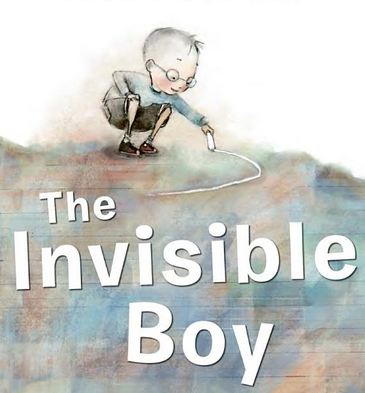
So I finally got to do my lesson on "The Invisible Boy!" Like all good lessons I started out with one plan, changed it, changed it the morning of, and then during my observation changed it again. Ha!

Well here's a rough draft of how I used this incredible book. Also, here's how it connect to Common Core Standards.

Introduction: 

I started having the kids gather around for a "science experiment."
Here's how it works:

        1. In a plate/flat container that's full of water I pour in pepper. I ask the students to think of the pepper as people. We call them our "pepper people." I ask them to notice that the pepper is floating together, almost like a family or a community This is a good place to discuss people coming together in the community, at school, etc. You can ask them to think of all the different ways people work together.

Just pour pepper into a plate filled with water.

        2. Then I introduce the "soap." Put the soap in the middle of the pepper. In previous lessons I have introduced the soap as a "bully," however this time I asked them to just think of the soap as a person.

Next take a bar of soap and place it in the middle of the pepper.
        3. As you will notice when you put the soap in the water the pepper immediately darts away from the soap. I asked the kids to tell me why the pepper would be running away from the soap. Some said that the soap was a bully, others said it might be someone who is scared, etc. This time I asked them to imagine the soap was not a bully, perhaps a new student or even a student they have known a long time. I then asked them again, why would the pepper run away?


    4. This was a good place to introduce our vocab. words of the day: exclusion and inclusion. I explained that the pepper were all off by themselves and the soap was left alone. We discussed the word exclusion here, when one student noticed that some of the pepper had stuck to the soap. She commented that if the soap were a bully perhaps they were joining the bully or maybe trying to stop him. I asked them to discuss why else the pepper might stick to the soap.


   5. Next we talk about inclusion and that it's important to include everyone and it just takes one "sugary sweet" random act of kindness to make a big change. As I talk about this I pour the sugar where the soap was and slowly you will see the pepper coming back together.
Lastly, pour sugar into the middle of the plate.


Lesson: Next I read the story, stoping frequently to ask the students to make connections between our experiment and the book; looking for pepper people, the soap, and the sugar. I also asked them to make text-to-life connections. Many of my students really opened up!

Game: Next we played Quiz Quiz Trade using the discussion questions in the back of the book. I had a student demonstrate with me how to play and model how to restate an answer. I asked everyone to show their listening skills by restating what they heard and repeating it each partner. They did a great job, I loved the "I heard you say that you think..." or "So you are saying that...." It was amazing.  I also added a few like: "What do you think exclusion is?" "Do you think exclusion is bullying?" and "What food have you tried from other countries?"

I don't have a Smart Board yet so I wrote the directions of how to play on the board. I had the students turn and talk with a neighbor to practice our level 1 whisper voices. They had to share one text-to-life connection using their level 1 voices. 
We discussed answering the same question again. I asked them to use high order thinking for repeat questions.

What if I don't have a partner? I asked a student to model with me how to ask for a partner before we began.
Get your game cards here: https://www.teacherspayteachers.com/Product/Quiz-Quiz-Trade-Game-Cards-for-The-Invisible-Boy-1745395
Get the lesson plan with CCSS and ASCA standards here: https://drive.google.com/file/d/0B_6T4rR2pFj5SlplTndNSE1GRU0/view?usp=sharing


Exit ticket: To leave the room I gave each student a post it note and asked them tell me what stuck with them.

Thursday, October 31, 2013

Can you see me now?

So I started this entry a few times this week, but never finished. Then I was reading the "Corner on Character" and ironically she had the same post! Great counselors must think alike.

"The Invisible Boy" by Trudy Ludwig is one of my favorite new buys.

Not only are the illustrations gorgeous, but the story is very powerful. So many of our students feel lost in the crowd, feel like they don't fit in, or even that they are the only ones dealing with a specific issue.


I love the suggestions that "Corner On Character" had for this book and I plan on incorporating several into my lesson. I love the idea of looking for character education words in the book and talking about the connecting it to their own lives with the use of "I" statements.


Here's how I planned on using the book. First, the author included discussion questions at the end of the story. I plan on having my students discuss these questions using the Quiz Quiz Trade game.

Next I am going to write a letter to the students in a "Dear Abby" format. I'll create a few one will be about bullying, one about being new to school, and one about making friends. I'll have the students write their own letters back to this fictional student. You could also use these social situations to do a role play activity, depending on the time you have with your class.

I'll post more as I continue to develop this lesson.


Speaking of invisible. These two are not! No, no these two have no consideration for personal space, but I love them.


Tuesday, June 11, 2013

Ted Talks About Bullying

If you have not incorporated Ted Ed into your lesson plans add it to your 2013-2014 bucket list now.
One of my 5th grade teachers shared this Ted Talks with me about bullying. I think it's very powerful.


http://ed.ted.com/on/p04GkF0j#dig
The best part is there are wonderful discussion questions on the site, a quiz to make sure they were listening, and a dig deeper section which allows the students to explore on their own. I think this will be a great socratic seminar for next year.

Sunday, October 21, 2012

Is That Bullying?

I was recently talking to our behavior specialist about my theory that you could incorporate dog training techniques into classroom and behavior management. She didn't laugh, in fact she agreed. We discussed the idea that classroom are much like packs. You have the dominant dogs as well as the submissives, that much like a pack there will be a student (or students) fighting for their role as alpha (much to the dismay of the teacher.)

In a pack dogs are looking to understand where they fit, similar to our students. Where do they sit at lunch? Who do they hang out with? In a group who is the leader and who are the followers?  Watching our students interact with each other isn't too much different from watching a group of dogs get together, except there is no name calling.

What does this have to do with bullying? I can't tell you how many times I get a "bullying" report from a parent or student that is actually not bullying. The most common scenario is this:
Three girls: Girl A is friends with Girl B and Girl C, but Girl B and Girl C do not get along. So Girl A and B get along fine, Girl A and C get along fine, but B and C not so much. This means when all three get together there are fireworks. This normally means Girl A gets put in the middle, trying to figure out her role. Should she be a peacemaker and encourage everyone to "just get along?" How should she divide her time? If she doesn't divide it equal an encore of fireworks. Similar Girls B and C are fighting for her attention, each one trying to dominate.

This is not bullying, and yet I get the "bullying report" weekly. So right now I am working with my fourth grade students to discuss what is bullying and what is simply students trying to work out group dynamics.

To tackle this issue I came up with a three part plan.

First, I am going into the classroom to do a seminar with my students on "what is bullying and what is not?" I gave them a list of scenarios and asked them to discuss as small and then large group. (I wish I had a video of this discussion because it was unbelievable- also I found my alpha, a young man who would "interrupt" and assert his dominance by talking over everyone and if they tried to stop him he just got louder.)

I put the survey on my website so parents and students in other grades coud take it together.

 Next,  I  sent home follow up information with my students to share with their parents.

Lastly, I will host a parent workshop on bullying. I am asking one of our counselors/school psychologists who has received Olweus training to be our speaker.

Bullying is  a serious issue, but in my school it's a buzz word that is being overused. I am hoping my three part plan will help my students understand what bullying really is.

On a side note, I hung out with the best dog ever this weekend. Sweet, calm, loves children, well behaved and well mannered. His name is Mike and some might say he is a bully breed. I saw he is a sweet heart breed. He also needs a home! If you or anyone you know want to adopt this handsome man please contact Nashville Pittie.


Can your body language determine how you feel?

Today I did a Socratic Seminar on body language. I asked the students three questions:

Can your body language change how you feel?
Can changing your body language give you more pride?
How does body language impact bullying?

The topic of body language has come up a lot not in my recent dog training. The Doggie Lama has given many good words of wisdom about believing what I say and not just changing my tone of voice. In essence just because I say it with a deeper, louder tone doesn't mean Brooklyn is going to respond unless I mean it; unless I set the expectation that I won't accept anything less than what I want.

I've been trying to practice this with her, so I have been trying to silently think about what I want and then say it with purpose. Todd can give commands with a simple whisper, I am not even close to that, but I am working on it. The idea that if you truly believe in what you are saying, your body language will change, your posture will change, and thus increasing the likely hood that your expectations are going to be met (thus increasing your pride) is a complex one that I threw at my sixth graders, but it was amazing.

I loved how they brought it back to bullying. That telling a bully to stop was much more likely to be successful if you meant it, and didn't just say the words, because a real bully could read your body language. What do you think? What impact does body language have on your life? How does it shape who you are?

Here is the Ted Talk that we did our seminar around:
http://www.ted.com/talks/amy_cuddy_your_body_language_shapes_who_you_are.html


This is Brooklyn sitting outside. I didn't tell her to stay I just gave her the "I mean it look!" and it worked =)


Monday, August 13, 2012

What Does A Bully Look Like?


 Could you guess the three? Click on the picture to find the original link and answer.

When I first tried this I couldn't, perhaps I am not as smart as I think I am (how many of you just rubbed your eyes and re-read that). It's true, Pits are harder to spot than I thought, don't believe me? Here are two more games:

http://www.pickthepit.com/

http://www.pbrc.net/poppysplace/games/AdultFindabull/findpitbull_v4.html

Pits are considered "bully breeds" a term I truly dislike, but it begs the question "What does a bully look like?" Can you determine all you need to know based on looking at someone? Apparently some people do.

When I played this game I wondered what my students might draw if I asked them what a bad guy or a bully looks like. Would they sterotype? Would they draw specific acts or qualities? On the other hand what does a friend look like?
Here is what a friend looks like to me:


Imagine this scenario: A child sees a group of new students playing together and wanders over to them to play, because they look like they could be nice new friends. When he/she does the new 'friends' start yelling, screaming and throwing toys at him/her to get him/her to go away. The child is startled and scared and throws the pencil he/she is carrying at them then runs away. Who, if any, is the bully? More importantly who and how to you punish?

Add caption
I recently found a very noble cause: Save Izzy, a case that has striking similarties to the situation I have pictured above. A Great Pyrness, Izzy, was able to wander (not run) into her neighbors yard due to the fact her shock collar needed to be reset and for a short moment in time she was able to go farther than she had before (and who wouldn't adventure out). When she did she was met by screaming neighbors and hot coffee. After being doused by hot coffee she nipped the neighbor, who is now suing to put Izzy down. Whose the bully?

"Dan Olweus, creator of the Olweus Bullying Prevention Program, defines bullying in his book, Bullying at School: What We Know and What We Can Do to include three important components:
1. Bullying is aggressive behavior that involves unwanted, negative actions.
2. Bullying involves a pattern of behavior repeated over time.
3. Bullying involves an imbalance of power or strength."

Well lets break it down, Olweus stlye:

1. Was there an unwanted action? Yes there were two: one wandered onto someones yard and another involved throwing hot coffee. However, this a signficant distinction here, only one was an aggressive behavior (and it involved a hot liquid).

2. Was there a repeated pattern of behavior? In everything I have read this was the first time Izzy wandered into someone else's yard. In this case her electric collar needed to be reset and for a short period of time she was able to adventure out (and who wouldn't). So there is no repeated pattern of behavior and as we have already established this singular act alone was not aggressive. Although I don't know the neighbors history, I must say that it strikes me if someone's first reaction is to strike out (or throw) that this is aggressive behavior that has been learned/practiced from somewhere.

3. Is there a power differential? Yes, in the case the human had more power. A dog is voiceless, and insintical. The dog can't reason with them, literally, so already the people have more power. A Great Pyrness is a big dog, I know my brother owns one adorable GP Lacey, but regarless of how big they are the human is still physically bigger. Yelling, screaming, and physcially bigger there is a pwoer differential and it goes to the human.

Lastely, the use of a weapon. The weapon in this case was the coffee. I recently read an article about a dog that pulled all of her ten day old puppies to safety from a fire that started after a car bomb exploded in front of her home.
 

Dogs are instintical, they have a will to survive, and I ask you if your only defense against being burned was your teeth, what would stop you from biting?

In the case of the children  I would hope that you wouldn't tell the teacher that the child that who threw the pencil should be removed from class and his/her parents called about bullying.  If that seems like an absurd consequence it should, because it's absurd to me that Izzy is being asked to leave her home for being a bully.