Showing posts with label common core. Show all posts

Tuesday, June 17, 2014

Teacher Organizers Aren't Just For Teachers

Thanks to my friend Chandra over at C Jayne Teach I am getting organized for the new year. My new Teacher Anchor just arrived and I am thrilled. #cjayneteach #teacheranchor

Here's how I am using mine (sorry the pics are blurry my camera phone just couldn't do the Anchor justice):

Connecting our curriculum to Common Core Standards seems to be a reoccurring theme at conferences and meetings I attend. I love that all the standards for K-3 are included in this planner and you can get the standards for other grades on her website. These easy sheets allow me to write down when I taught those standards, which will be easy to fill in as I write my lesson plans and then can use as part of my evaluation at the end of the year.
This fantastic page is at the end of each Common Core section and allows me to write down what lesson I did to meet standards. For example: 5th Grade- Socratic Seminar on fear or 3rd Grade- "Invisible Boy" lesson on friendship (see standards it met here.)

Instead of subjects I broke down my sections into the different parts of my program, including; Individual, Groups, Classroom Guidance,  Program Planning, and Other. Under other I will write down meetings, IEP/ 504 planning, parent conferences, collaborations, etc. 

I love that each day I can write down students I need to see or walk in.  

Sunday, March 2, 2014

Connecting to Common Core Through Socratic Seminars

Today we were asked how has the move towards "Common Core" affected your role as a counselor.
For me the most obvious way is that I feel more limited with my time, it's simply not as easy to take a student out of the classroom even for 15 minutes.

Additionally, I think counselors have been doing "Common Core" for a long time. I could be wrong, but I feel like Common Core is a push towards independent learning and problem solving. Well don't we do that every day? (I won't tell you how to fix this problem with your friend, but I can help you pick and practice an option that works best for you. I can't fix what's happening at home, but I can help you develop coping skills.)

For me the best way to reach my older students, meet Common Core standards, and to really see growth in how my students treat each other is through Socratic Seminars.

I can't encourage enough you to use Socractic Seminars with your students (grades 5 up). Imagine running a small group, but reaching triple the amount of students. Imagine creating a positive classroom environment, tackling bullying, practicing social skills, and encouraging higher order thinking skills in 45 minutes. It's great, but the beginning stages can be frustrating so here are my helpful tips:


Watch, Listen Learn: 
If possible watch a seminar before you venture out on your own. The amazing Angela Bunyi (Academic Interventionist and Teacher) let me watch her in action before we did one together. I was so impressed by how smoothly it ran in her classroom, so I must admit I was a little blind sided when my first solo seminar hit speed bump after speed bump. She taught me a lot! I could never duplicate nor do I want to even try and top her expertise so read her article on doing a seminar here:
http://www.scholastic.com/teachers/top-teaching/2010/11/higher-order-comprehension-power-socratic-seminar

It's going to practice: 

Socratic seminars take a certain flow and self control. We are asking a lot of our students (and even ourselves). They have to hold their thoughts/opinions until we have asked for them, they must practice discussing not debating, they can't have side conversations, we can't jump in a save them! Seminars bring up uncomfortable feelings, and they need to practice coping with those. For example, at the end of my last seminar I got feedback from several students that they just didn't like it. When I looked closer at the students that said they didn't care for this lesson I realized they fell into one (or both) of two categories: they had stated opinions that differed from the majority and/or they were students that loved concrete answers (they were uncomfortable in the gray they wanted 1+1=2 always). Practice, practice, practice.

Saturday, November 16, 2013

What I really did to prevent invisibility......

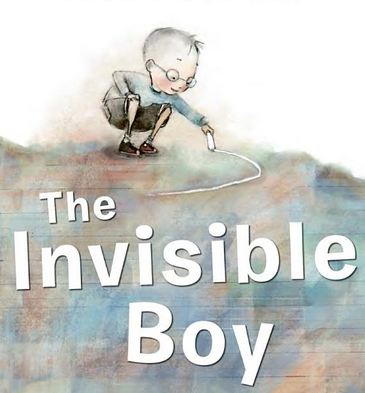
So I finally got to do my lesson on "The Invisible Boy!" Like all good lessons I started out with one plan, changed it, changed it the morning of, and then during my observation changed it again. Ha!

Well here's a rough draft of how I used this incredible book. Also, here's how it connect to Common Core Standards.

Introduction: 

I started having the kids gather around for a "science experiment."
Here's how it works:

        1. In a plate/flat container that's full of water I pour in pepper. I ask the students to think of the pepper as people. We call them our "pepper people." I ask them to notice that the pepper is floating together, almost like a family or a community This is a good place to discuss people coming together in the community, at school, etc. You can ask them to think of all the different ways people work together.

Just pour pepper into a plate filled with water.

        2. Then I introduce the "soap." Put the soap in the middle of the pepper. In previous lessons I have introduced the soap as a "bully," however this time I asked them to just think of the soap as a person.

Next take a bar of soap and place it in the middle of the pepper.
        3. As you will notice when you put the soap in the water the pepper immediately darts away from the soap. I asked the kids to tell me why the pepper would be running away from the soap. Some said that the soap was a bully, others said it might be someone who is scared, etc. This time I asked them to imagine the soap was not a bully, perhaps a new student or even a student they have known a long time. I then asked them again, why would the pepper run away?


    4. This was a good place to introduce our vocab. words of the day: exclusion and inclusion. I explained that the pepper were all off by themselves and the soap was left alone. We discussed the word exclusion here, when one student noticed that some of the pepper had stuck to the soap. She commented that if the soap were a bully perhaps they were joining the bully or maybe trying to stop him. I asked them to discuss why else the pepper might stick to the soap.


   5. Next we talk about inclusion and that it's important to include everyone and it just takes one "sugary sweet" random act of kindness to make a big change. As I talk about this I pour the sugar where the soap was and slowly you will see the pepper coming back together.
Lastly, pour sugar into the middle of the plate.


Lesson: Next I read the story, stoping frequently to ask the students to make connections between our experiment and the book; looking for pepper people, the soap, and the sugar. I also asked them to make text-to-life connections. Many of my students really opened up!

Game: Next we played Quiz Quiz Trade using the discussion questions in the back of the book. I had a student demonstrate with me how to play and model how to restate an answer. I asked everyone to show their listening skills by restating what they heard and repeating it each partner. They did a great job, I loved the "I heard you say that you think..." or "So you are saying that...." It was amazing.  I also added a few like: "What do you think exclusion is?" "Do you think exclusion is bullying?" and "What food have you tried from other countries?"

I don't have a Smart Board yet so I wrote the directions of how to play on the board. I had the students turn and talk with a neighbor to practice our level 1 whisper voices. They had to share one text-to-life connection using their level 1 voices. 
We discussed answering the same question again. I asked them to use high order thinking for repeat questions.

What if I don't have a partner? I asked a student to model with me how to ask for a partner before we began.
Get your game cards here: https://www.teacherspayteachers.com/Product/Quiz-Quiz-Trade-Game-Cards-for-The-Invisible-Boy-1745395
Get the lesson plan with CCSS and ASCA standards here: https://drive.google.com/file/d/0B_6T4rR2pFj5SlplTndNSE1GRU0/view?usp=sharing


Exit ticket: To leave the room I gave each student a post it note and asked them tell me what stuck with them.

Thursday, July 25, 2013

The only planner you'll ever need!


My dear friend (and it's not just because of her love of the royal family) is doing a pre-sale of her super cute items for Middle Tennessee teachers. I can't encourage you enough to share her site with your teachers. It's just full of resources to help them with common core, lesson planning, organization, etc. She is a wealth of knowledge! I often found that I learned more from her when we consulted than I think I was teaching her.

Here is a sneak peak of some of the items and the links so you can get your own. I plan on using this binder for my planner this year. It's well thought out, has plenty of room to write, and I think it's great for goal setting.
From Pinterest: http://pinterest.com/pin/7529524349993900/

From Pinterest: http://pinterest.com/pin/7529524349955057/

From Pinterest: http://pinterest.com/pin/7529524349914638/

Shop her Etsy store.


You will be so glad you did.